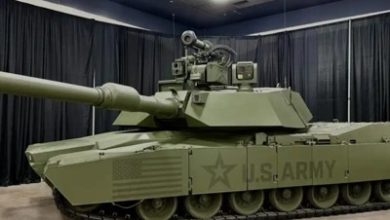
Key Points and Summary – The B-52J modernization program is facing a “nightmare” of cost overruns and multi-year delays, pushing its full operational capability to 2033.
-Vice Adm. Richard Correll, the nominee for U.S. Strategic Command, recently testified that while the B-52 upgrade is “essential,” he supports increasing B-21 Raider production beyond the planned 100 jets—echoing concerns that the 70-year-old “BUFF” may struggle to survive in modern contested airspace.
-Meanwhile, the B-52 remains active in current operations, recently conducting a joint show-of-force mission with U.S. Navy warships in the Caribbean.
Why the B-52J Program Is Facing Delays, Cost Overruns, and Obsolescence
“The B-52J program is essential,” said the nominee to head U.S. Strategic Command, Vice Adm. Richard Correll, Modern Engineering Marvels reported.
In the same hearing late last year, Correll also endorsed increasing production of the B-21 Raider beyond the 100 fighters expected to be ordered. That is a view he shares with his predecessor, Gen. Anthony Cotton.
The debate is about “how much investment to put toward sustaining a 70-year-old platform versus putting resources into accelerating Raider production.” The current plan is for 100 B-21 jets and 75 B-52Js.
And while the B-21 project is, by all accounts, on time and under budget, that does not appear to be the case for the B-52’s upgrade program.
Air Force Global Strike Command, back in June of last year, marked the 70th anniversary of the B-52 Stratofortress, which it calls the “BUFF.”
“Since its creation, the B-52 has anchored strategic deterrence for the nation,” Maj. Gen. Jason Armagost, Eighth Air Force and Joint Global Strike Operations Center commander, said in a June statement. “As we celebrate 70 years of the BUFF, we look to the next model to serve as the physical embodiment of the idea of peace through strength and carry us into the 2050s.”
The statement discussed the B-52’s latest planned upgrades:
“The Commercial Engine Replacement Program will replace the existing B-52 engines (TF33) with new commercial engines (Rolls Royce F130). The Radar Modernization Program will improve the reliability of radar used for navigation, weather avoidance and air refueling,” the Air Force said. “The new long-range standoff (LRSO) missile will replace the aging air-launched cruise missile and will provide credible air-delivered nuclear deterrent in the modern, complex world.”
“Nightmare”
According to a report by Simple Flying, the upgrade program for the B-52 is running into a great deal of trouble.
“The B-52 has been America’s long-range strike icon for decades, but bringing it into the modern era and keeping it airworthy for over a century has proven far more complicated, costly, and delayed than expected,” the report said. “What was meant to be a cost-effective modernization has become a logistical and financial burden.”
Earlier this year, the Air Force projected that the fully upgraded B-52s would not be fully operational until 2033, three years later than originally planned.
“In short, the B-52J program is becoming a nightmare because the Air Force is pouring billions into upgrading a 70-year-old platform plagued by integration delays, spiraling costs, and serious doubts about its ability to survive in modern contested airspace,” Simple Flying reported.

B-52J Bomber U.S. Air Force. Image Credit: Creative Commons.
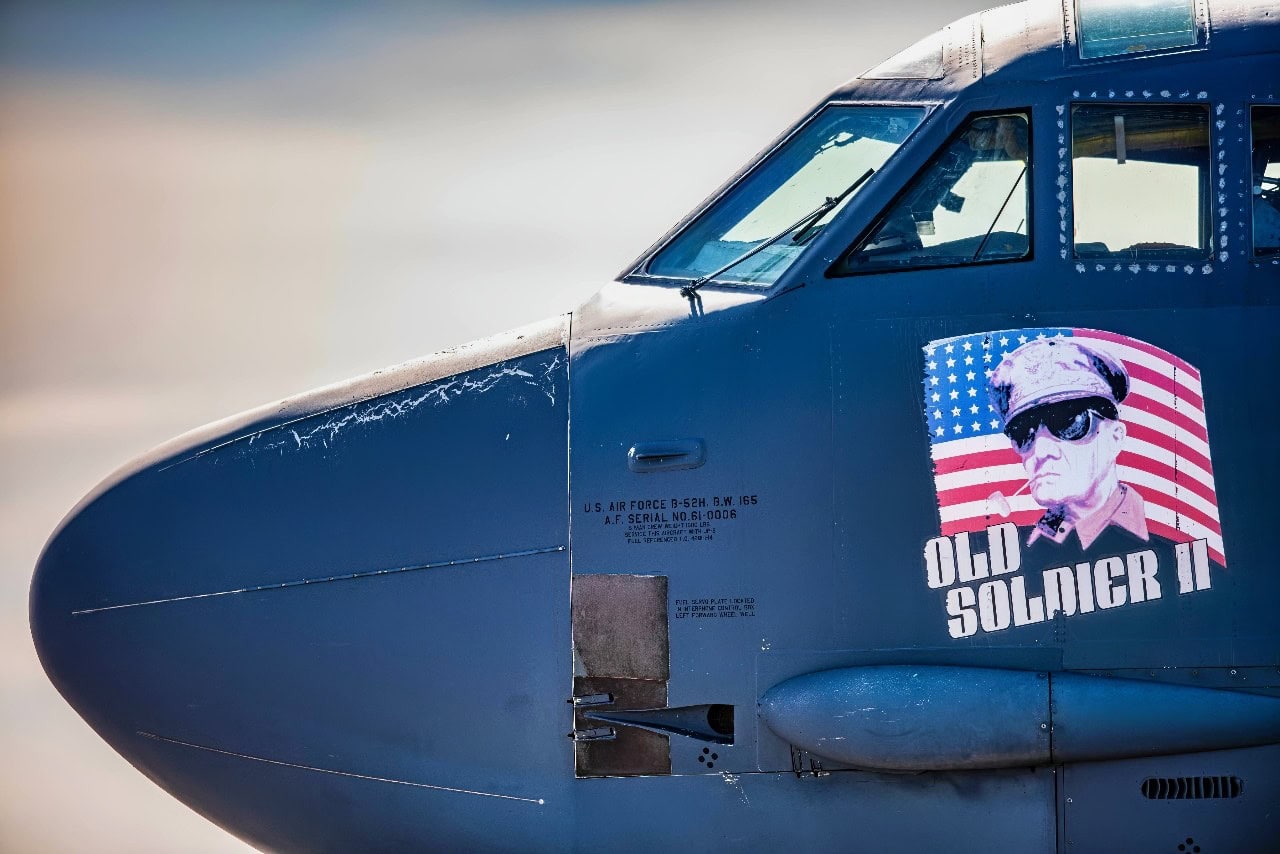
A U.S. Air Force B-52H Stratofortress assigned to the 96th Bomb Squadron, Barksdale Air Force Base, Louisiana, sits on the flightline during exercise Prairie Vigilance 25-1 at Minot Air Force Base, North Dakota, April 12, 2025. For more than 60 years, the B-52 has been the backbone of the strategic bomber force of the United States. As a routine training mission, PV 25-1 enhances the safety, security, and reliability of the bomber leg of the U.S. nuclear triad. (U.S. Air Force photo by Senior Airman Kyle Wilson)
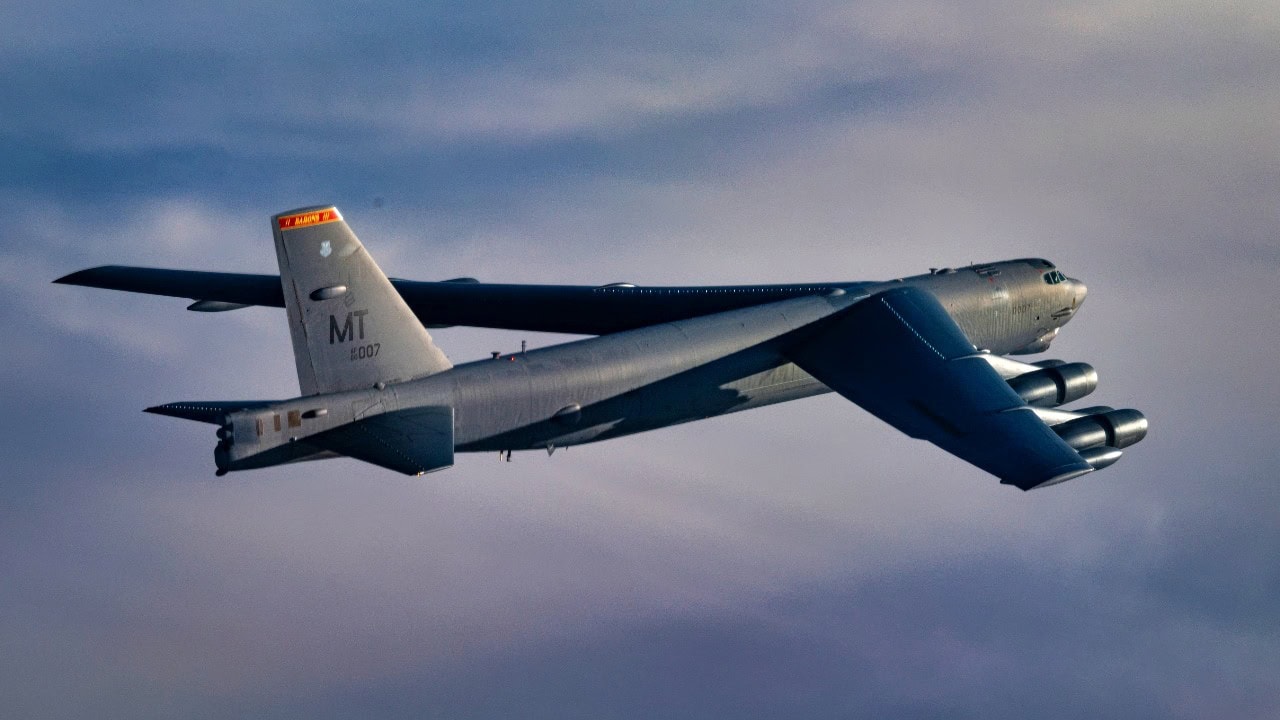
A U.S. Air Force B-52H Stratofortress from the 69th Expeditionary Bomb Squadron flies over the skies of Sweden for their celebration of their acceptance into NATO during Bomber Task Force 25-2, RAF Fairford, United Kingdom, March 11, 2025. These operations demonstrate the ability to rapidly deploy strategic assets in support of global stability. (U.S. Air Force photo by Master Sgt. Chris Hibben)

A U.S. Air Force B-52H Stratofortress assigned to the 23rd Bomb Squadron sits on the flightline during exercise Prairie Vigilance 25-1 at Minot Air Force Base, North Dakota, April 12, 2025. Vigilance series exercises are conducted with a focus on the safe and secure handling of equipment. (U.S. Air Force photo by Senior Airman Kyle Wilson)
The story added that while the B-52, which will soon enough reach a century in service, is “the longest-serving combat aircraft in history,” it risks becoming obsolete—even with the upgrades.
“The Air Force’s decision to continue upgrading it rather than fully pivoting to the stealthy B-21 Raider has led to a Catch-22 situation with no end in sight: maintaining capability on paper, but at the expense of long-term efficiency and adaptability,” the article said.
There are several problems: Delays, cost overruns, complexity of integration, aging airframes, and what Simple Flying describes as a “capability vs. threat mismatch.”
What if It Goes Wrong?
Back in May of last year, as reported by Air and Space Forces, Chief of Staff Gen. David W. Allvin testified to the Senate Armed Services Committee.
Allvin was asked by a senator about the fate of the B-52 modernization program. He replied that if the upgrade “goes worse than we hope, then we would need more funding for the B-21.”
That story also looked at the details of the B-52’s upgrade program.
“The B-52J upgrade consists of the Commercial Engine Replacement program (CERP) and Radar Modernization Program (RMP), both now underway, which seek to replace the engines and pylons of the entire 76-airplane B-52H fleet, along with its radar, some communications upgrades, and other improvements—all to be delivered starting at the end of this decade,” the report said.
The radar upgrade, in particular, has resulted in a breach of the Nunn-McCurdy Act, meaning the Air Force has to reassess the program.
Army Recognition in May looked at the upgrade’s timeline.
“The B-52J’s first flight is expected around 2028, with initial operational capability pushed to 2033, three years later than initially planned,” Army Recognition reported. “The delay stems from underestimated funding, integration challenges, and material sequencing problems identified by the Government Accountability Office (GAO). The program has encountered similar hurdles to other major U.S. military procurements but has advanced nonetheless, with the engine component on track despite setbacks in the overall integration.”
And while the upgraded jet will be “non-stealthy,” the new fighter will be “optimized for standoff attacks using long-range weapons.”
According to The Aviationist, the B-52 ‘s modernized radar is nearing flight testing.
“I believe that we are very close to getting that first radar to Edwards Air Force Base to begin flight test,” Lt. Gen. Andrew J. Gebara, Deputy Chief of Staff for Strategic Deterrence and Nuclear Integration, said in August.
The B-52 Today
The B-52 is also in the news for reasons having nothing to do with its upgrade.
According to the Defence Blog, a B-52 Stratofortress was involved in one of the recent U.S. strikes on boats in the Caribbean.
The “Stratofortress conducted a coordinated transit with two Navy warships—USS Gettysburg and USS Stockdale—during a joint, multi-domain operation in the Caribbean Sea,” Defence Blog reported, referring to an operation on Nov. 13 of last year.
The bomber “flew overhead as the Ticonderoga-class guided missile cruiser USS Gettysburg (CG 64) and the Arleigh Burke-class guided missile destroyer USS Stockdale (DDG 106) operated below in a visible demonstration of integrated air and maritime capabilities,” Defence Blog reported, citing the Navy.
About the Author: Stephen Silver
Stephen Silver is an award-winning journalist, essayist, and film critic, and contributor to the Philadelphia Inquirer, the Jewish Telegraphic Agency, Broad Street Review, and Splice Today. The co-founder of the Philadelphia Film Critics Circle, Stephen lives in suburban Philadelphia with his wife and two sons. For over a decade, Stephen has authored thousands of articles that focus on politics, national security, technology, and the economy. Follow him on X (formerly Twitter) at @StephenSilver, and subscribe to his Substack newsletter.