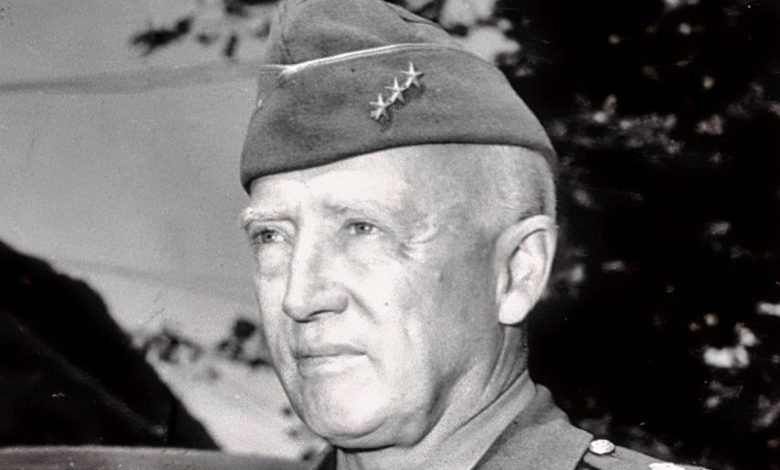
U.S. Army Quote of the Day by George Patton: ‘Wars may be fought with weapons, but they are won by…’

Summary and Key Points: General George S. Patton believed “wars are won by men,” a philosophy forged by his lifelong battle to overcome undiagnosed dyslexia.
-Raised on stories of Confederate ancestors and convinced of his own reincarnation, Patton transformed academic struggles at West Point into an obsession with discipline and physical excellence.
-From competing in the 1912 Olympics to leading the first motorized attack against Pancho Villa, his early career was a relentless preparation for destiny.
-By embracing the tank in WWI, Patton cemented the aggressive, shock-warfare style that would later define his legendary command in World War II.
‘Wars Are Won by Men’: The Brutal Leadership Philosophy of George Patton
“Wars may be fought with weapons, but they are won by men. It is the spirit of the men who follow and of the man who leads that gains that victory.” – George Patton.
As a leader and a commander in the U.S. Army, George S. Patton felt that it was his duty to shape his men into the best soldiers they could be. Indeed, in his own personal life, Patton sought to overcome his own physical limitations and be the best commander that he could be.
As a young child, Patton struggled with learning disabilities that historians guess was dyslexia. Rather than letting these limitations control him, he persevered and sought to overcome his physical circumstances, like he would do in his later military campaigns.
Early Life
Patton’s family history profoundly shaped his worldview. His ancestors included Soldiers in the American Revolution and Confederate officers from the American Civil War, most notably his grandfather, Colonel George Smith Patton, who was killed at the Battle of Winchester in 1864. Raised on stories of cavalry charges, honor, and defeat, Patton absorbed a romanticized and deeply personal vision of military history. These stories were reinforced by his father, George S. Patton Sr., a lawyer and intellectual who emphasized classical education and instilled in his son a belief that the past was alive and morally instructive.
Throughout his life, Patton struggled with what was likely dyslexia, though it went undiagnosed at the time. This made reading and writing difficult, and he often lagged behind peers academically. However, rather than discouraging him, these challenges intensified his willpower.
He memorized large portions of classical texts and poems through oral repetition and developed a belief that determination could conquer innate limitation. From an early age, Patton believed himself to be destined for greatness, even claiming later in life that he believed he had fought and died in earlier wars through reincarnation.
Education and the Cultivation of Discipline
Patton’s formal education began at the Virginia Military Institute (VMI) in 1903. VMI’s emphasis on discipline, drill, and classical military ideals resonated deeply with him, though academically he continued to struggle.
After one year, Patton secured admission to the United States Military Academy at West Point, entering in 1904. At West Point, Patton’s deficiencies in mathematics forced him to repeat his first year.
This was a humiliation he carried with him for life, yet it also fueled his obsession with self-improvement. Patton emerged not as an outstanding scholar, but as a superb athlete and leader. He excelled in fencing, riding, and physical drills, graduating in 1909 ranked 46th out of 103 cadets. More importantly, West Point reinforced Patton’s belief in leadership through presence, example, and moral authority, all of which he would demonstrate in his career.
During this period, Patton also developed a fascination with ancient warfare. He admired figures like Julius Caesar, Napoleon Bonaparte, and Alexander the Great, studying not only their campaigns but their personas. He grew convinced that a general must embody confidence and aggressiveness, projecting certainty even in chaos.
Early Army Career and the Cult of the Warrior
Patton was commissioned as a second lieutenant in the cavalry, a branch he revered as the aristocratic arm of the military. He became an accomplished horseman and competed in the 1912 Stockholm Olympics in modern pentathlon, placing fifth.
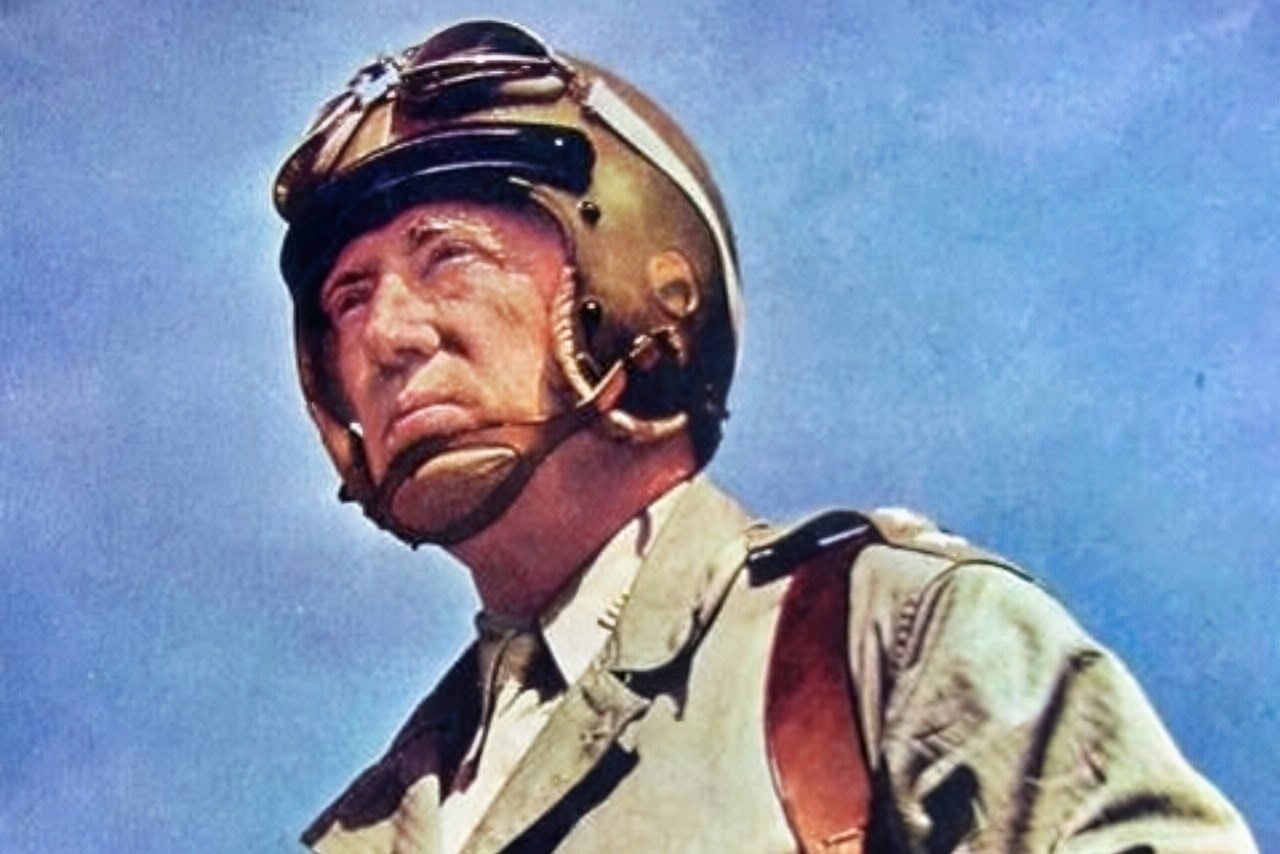
General George Patton of the U.S. Army. Image Credit: Creative Commons.
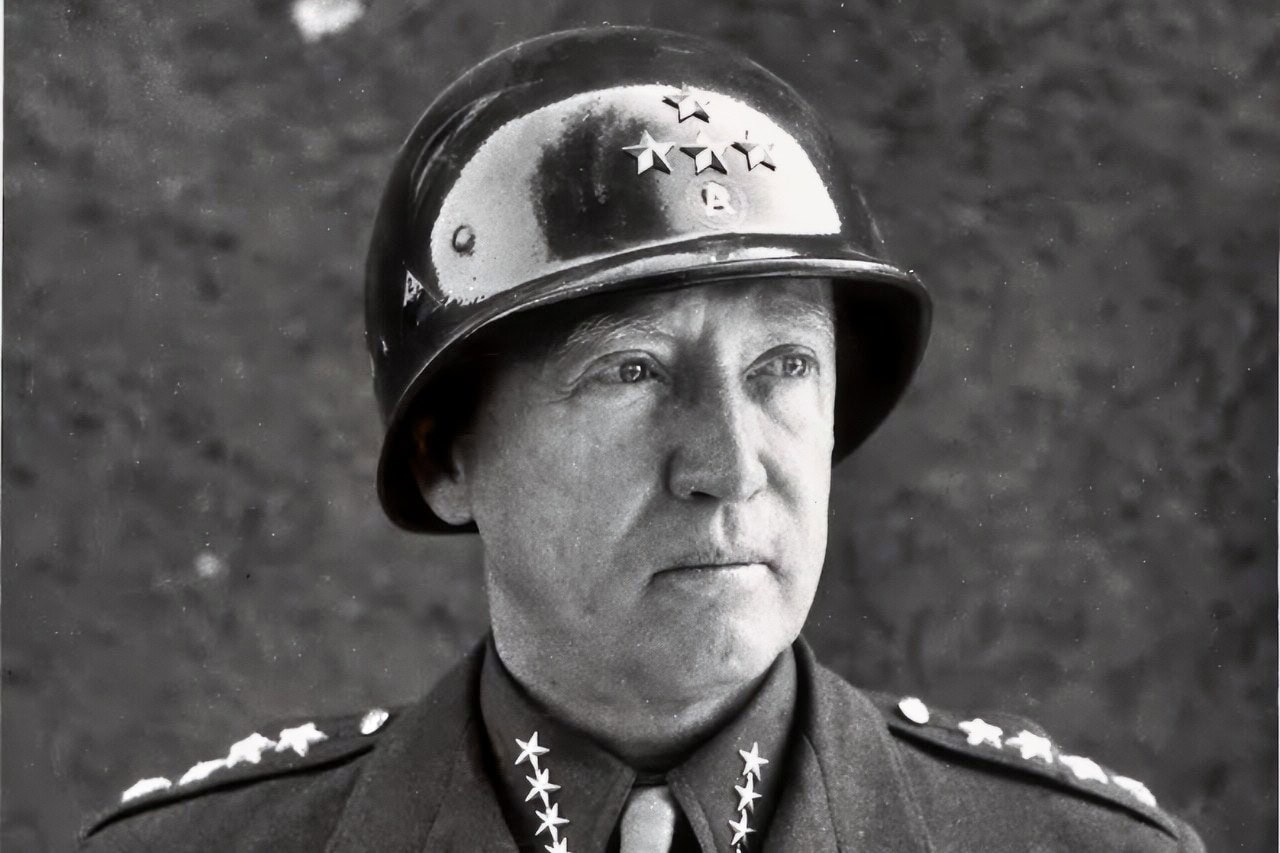
U.S. Army General George Patton
Though he later alleged that he was cheated out of a higher ranking, his participation demonstrated his belief that personal physical excellence was inseparable from command.
These early years also saw Patton cultivating an increasingly rigid personal code. He was obsessed with uniforms, personal appearance, and ritual. To Patton, a sharply dressed officer inspired confidence and fear, both in subordinates and enemies. He would later use this technique to restore the morale and discipline of the battered and beaten U.S. II Corps during his African campaign.
The Mexican Expedition and First Combat Exposure
Patton’s first taste of combat-like conditions came during General John J. Pershing’s punitive expedition against Pancho Villa in Mexico in 1916. Serving as Pershing’s aide, Patton demonstrated initiative and aggressiveness which quickly caught his commander’s eye.
During a raid, Patton led a motorized attack resulting in the deaths of several Villa associates, one of the first uses of automobiles in American combat operations.
The incident was heavily publicized and established Patton as a bold, innovative officer. He personally posed for photographs with the bodies of the dead, already demonstrating his instinct for symbolism and publicity. More importantly, the expedition brought Patton under Pershing’s mentorship, a relationship that would shape the rest of his early career.
World War I and the Birth of the Tanker
World War I transformed Patton’s military identity. Initially frustrated by the static nature of trench warfare, he found purpose in the emergence of armored vehicles. Assigned to the newly formed Tank Corps in 1917, Patton embraced tanks not merely as machines, but as instruments of shock, speed, and moral domination.
Although it took him a bit of time to warm up to the idea of tanks, they would later become the staple of his aggressive style of warfare.
He was wounded during the Meuse-Argonne Offensive in 1918 but returned to command as soon as possible. By war’s end, Patton had earned multiple decorations and a reputation as an energetic, if unconventional, officer. Yet the war also left him dissatisfied; he believed the conflict had ended before true maneuver warfare could be fully realized.
By 1939, Patton stood on the cusp of the war that would define him. His life to that point had been a long preparation for high command. Every stage of his upbringing and career reinforced his conviction that he was meant to lead armies in great battles.
Though not yet a household name, Patton had already forged the traits that would make him famous. In this sense, the Second World War did not create George S. Patton but rather it revealed a commander who had been preparing for that moment his entire life.
About the Author: Isaac Seitz
Isaac Seitz, a Defense Columnist, graduated from Patrick Henry College’s Strategic Intelligence and National Security program. He has also studied Russian at Middlebury Language Schools and has worked as an intelligence Analyst in the private sector.